|
|
Specialty Travel
Sailing & CruisingA Great Setting for Enjoying Water Sports
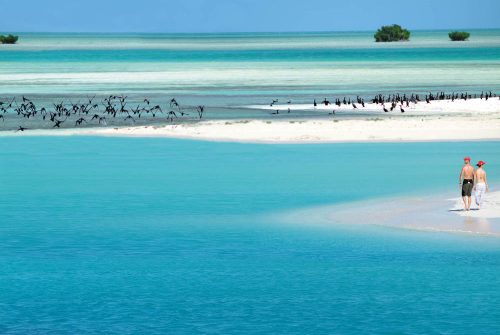
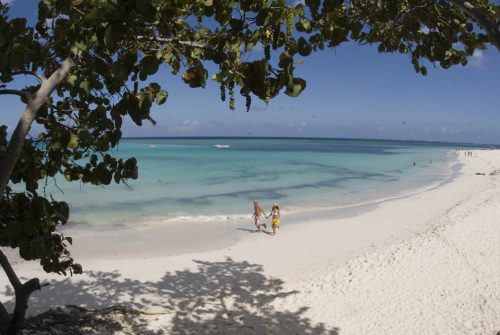
One of the Caribbean’s most enchanting sailing areas, Cuba has it all—natural marvels, gorgeous weather and historical charm. The first known sailor to drop anchor off this green-and-blue isle was Christopher Columbus, who in 1492 declared it “the most beautiful land human eyes have seen”. Ernest Hemingway spent three decades tooting around the Cuban keys in his fishing boat, the Pilar, then immortalized them in his novels, The Old Man and the Sea and Islands in the Stream. And Fidel Castro sailed the Cuban seas in his cabin cruiser, the Granma.
Cuba’s 5,746-kilometre coastline is marked by 200 sheltered bays, more than 4,000 keys and islets and 588 On the north coast, the ENE winds prevail, while in the south ESE and SE winds predominate. Average wind speed varies between eight and 12 knots. Hurricane season is June to November, with September and October being the highest-risk months. While Cuba’s average air temperature is 25.5°C, the island has about 20 cold fronts a year. These last for two or three days and come with high swells and dramatic temperature drops. Nevertheless, Cuba averages 330 days of sunshine a year.
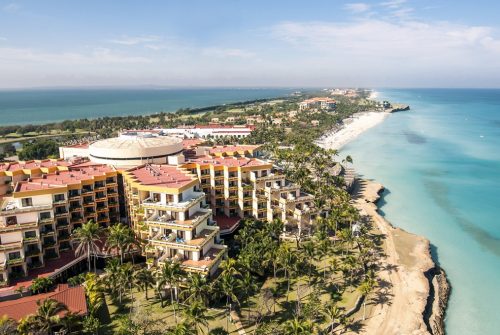
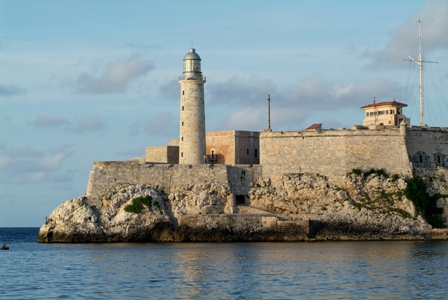
Habana Varadero Ciego de Avila (the “Cuban keys”) Holguin
Port authorities will ask you for the following information: You must follow the instructions given by the port authorities and remain on board until all legal formalities are concluded. Each crew member must have a valid passport and tourist card. Charts and details:
Nautical charts and the official companion booklet, Yachtsman’s Guide, Cuba, can be ordered from Tel: (537) 33 4705, Ext. 08 |
More than just...Cuba is more than just the largest island in the Antilles. It is an ontrincate archipielago comprising the main island (about two thirds the size of Florida), the Isle of Youth and about 4,195 key (cayos) and islets. The combined surface area of these Caribbean land masses is some 110,992 square kilometers and 140 kilometers of... ![]() |